
The Woman Who Changed Maternal Health
Dr Lucy Wills asked a question no one else was asking. Her answer became one of the most important discoveries in the history of women’s health.
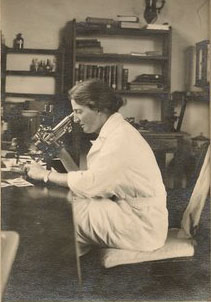
In 1928, a British scientist named Lucy Wills packed her bags and travelled to Bombay. She had been asked to investigate why large numbers of pregnant women working in the city’s textile mills were developing severe anemia in pregnancy — and dying from it. Doctors had documented the condition. Nobody had identified the cause. And until Wills arrived, nobody had looked closely enough to find it.
What she discovered would eventually be known as the Wills Factor — the compound we now call folate, and its synthetic form, folic acid in pregnancy supplementation. Today, folic acid supplementation is recommended to every woman planning a pregnancy, anywhere in the world. That recommendation traces directly back to a research trip most people have never heard of, and a scientist whose name is rarely taught.
This Women’s History Month, her story is worth telling properly.
In Other Words
Terms You Should Know
Folate: A naturally occurring B vitamin essential for producing healthy red blood cells and for fetal development, particularly in early pregnancy
Folic Acid: The synthetic form of folate, used in supplements and food fortification. Recommended before and during pregnancy to reduce the risk of birth defects.
Macrocytic anemia: A form of anemia in which red blood cells are abnormally large but reduced in number, impairing the blood’s ability to carry oxygen. This is the condition Wills identified and studied.
Hematologist: A specialist in the study and treatment of blood and blood disorders.
A first-class education in a system that barely recognised it
Lucy Wills was born in Sutton Coldfield in 1888. She attended Cheltenham Ladies’ College, one of the first schools in Britain to take girls’ science education seriously, and went on to earn a double first honours degree in botany and geology from Newnham College, Cambridge, in 1911.
It was a rare achievement. It was also, formally, worth very little. Cambridge did not award degrees to women until 1948. She had completed the work of a first-class graduate and gained none of the standing that came with it. She qualified as a medical doctor in London in 1920, a path that was narrow and expensive for women at the time, and joined the Department of Chemical Pathology at the Royal Free Hospital, where she began developing her interest in hematology.
A Doctor Who Went Where the Need Was
Her character showed early. When the First World War began, she travelled to South Africa to work as a volunteer nurse — no obligation, no salary. That willingness to go where the need was would define the rest of her career.
Bombay, 1928 — the women at the centre of the story
Women workers at a Bombay textile mill. Conditions like these were the backdrop to Dr. Lucy Wills’ research in the late 1920s.
The textile mills of Bombay in the late 1920s employed thousands of workers, many of them women. Hours were long, housing was overcrowded, and pay was low. Among this population, a severe and frequently fatal form of anemia in pregnancy had become widespread.
Dr. Margaret Balfour of the Indian Medical Service had been documenting the problem and reached out to Wills to join a maternal mortality inquiry at the Haffkine Institute in Bombay. Wills arrived in 1928 and spent five years conducting research across Bombay, Coonoor, and Madras. It is worth being clear about the context: these were women with limited agency in a colonial setting, and what informed consent looked like in practice — for a mill worker in 1920s Bombay — cannot be answered with confidence from this distance. What can be said plainly is that the suffering of women in those mills prompted the question, and their experience generated the knowledge. The discovery belongs to them too.
Did You Know?
Anemia and Blood Health Facts
Anemia in pregnancy is the most common nutritional deficiency in the world, affecting an estimated 40% of pregnant women globally. (WHO)
Folic acid, first identified through Wills’ research, is recommended globally for all women planning a pregnancy and in the first trimester, to reduce the risk of serious birth defects of the brain and spinal cord.
The Wills Factor was isolated and confirmed as folate in 1941 — a full decade after Wills published her original findings in the British Medical Journal.
At the time of Wills’ research, Bombay’s textile industry employed large numbers of women workers on shifts of up to twelve hours. Nutritional deficiency ran through this population, and nobody fully understood why.
- In 2019, Google marked Lucy Wills’ 131st birthday with a Doodle shown across North America, Europe, and India.
The Discovery of Folic Acid in Pregnancy
Wills’ research was methodical. She studied the diets of different groups of women in Bombay and identified a clear pattern: women with access to more varied nutrition were significantly less likely to develop severe anemia in pregnancy. That pointed toward a nutritional deficiency as the underlying cause — not simply the physical demands of pregnancy.
Working with laboratory animals, she tested dietary interventions carefully. Crude liver extract produced improvement. Then she tried Marmite — the British yeast extract — and found that it reversed the condition entirely. The active compound was named the Wills Factor. In 1941, it was confirmed as folic acid.
She published her paper in the British Medical Journal in 1931. Precise, carefully argued, and consequential. What she found in a Bombay laboratory nearly a century ago now shapes every prenatal care guideline in the world.
From Bombay’s textile mills to modern clinical care, the work Dr. Lucy Wills began nearly a century ago is visible in every antenatal consultation today.
Folic Acid in Pregnancy — and the Work That Isn’t Finished
Lucy Wills gave her expertise, her time, and her willingness to go where the problem was. What the world gained was a discovery that still protects pregnant women every day. That exchange, knowledge freely given, lives quietly saved, is the model that drives everything World Anemia Awareness does now.
Folic Acid in Pregnancy: The Gap That Remains
That principle, that giving knowledge forward, to people who need it and don’t yet have it, compounds across generations, is what connects Wills’ work to what World Anemia Awareness does now. Evidence-based education about blood health reaches women who would otherwise not encounter it. It reaches healthcare professionals who can identify and treat the conditions earlier. And it reaches the next generation of clinicians who will carry that knowledge further still.
Anemia in pregnancy remains the most common nutritional deficiency in the world. Clinicians still miss it too often. Fatigue, pallor, breathlessness — too many women hear that this is just pregnancy, when something treatable is driving it. The clinical and educational work that Lucy Wills began in 1928 is not yet finished. Her name is worth knowing.
Trusted Voices on Blood Health
“Anemia affects 40% of pregnant women globally, with iron deficiency the most common cause. The consequences include adverse maternal and fetal outcomes.” — World Health Organization (WHO)
Knowing what to ask at your antenatal appointment can make a real difference. Scroll down for questions worth raising with your doctor or midwife.
Questions to Ask Your Doctor or Midwife
If you are pregnant or planning to become pregnant, these are straightforward and appropriate questions to raise at any appointment:
- Have my iron levels and haemoglobin been checked recently?
- Am I getting enough folate or folic acid? When should I start supplementing?
- Could my tiredness or breathlessness be connected to my blood health?
- If I have heavy periods, could iron deficiency be a factor?
- What signs of anemia should I watch for during pregnancy?
Are you getting the right blood tests?
Disclaimer:
This information is educational, not medical advice. Always talk to your doctor before making changes to your health care.