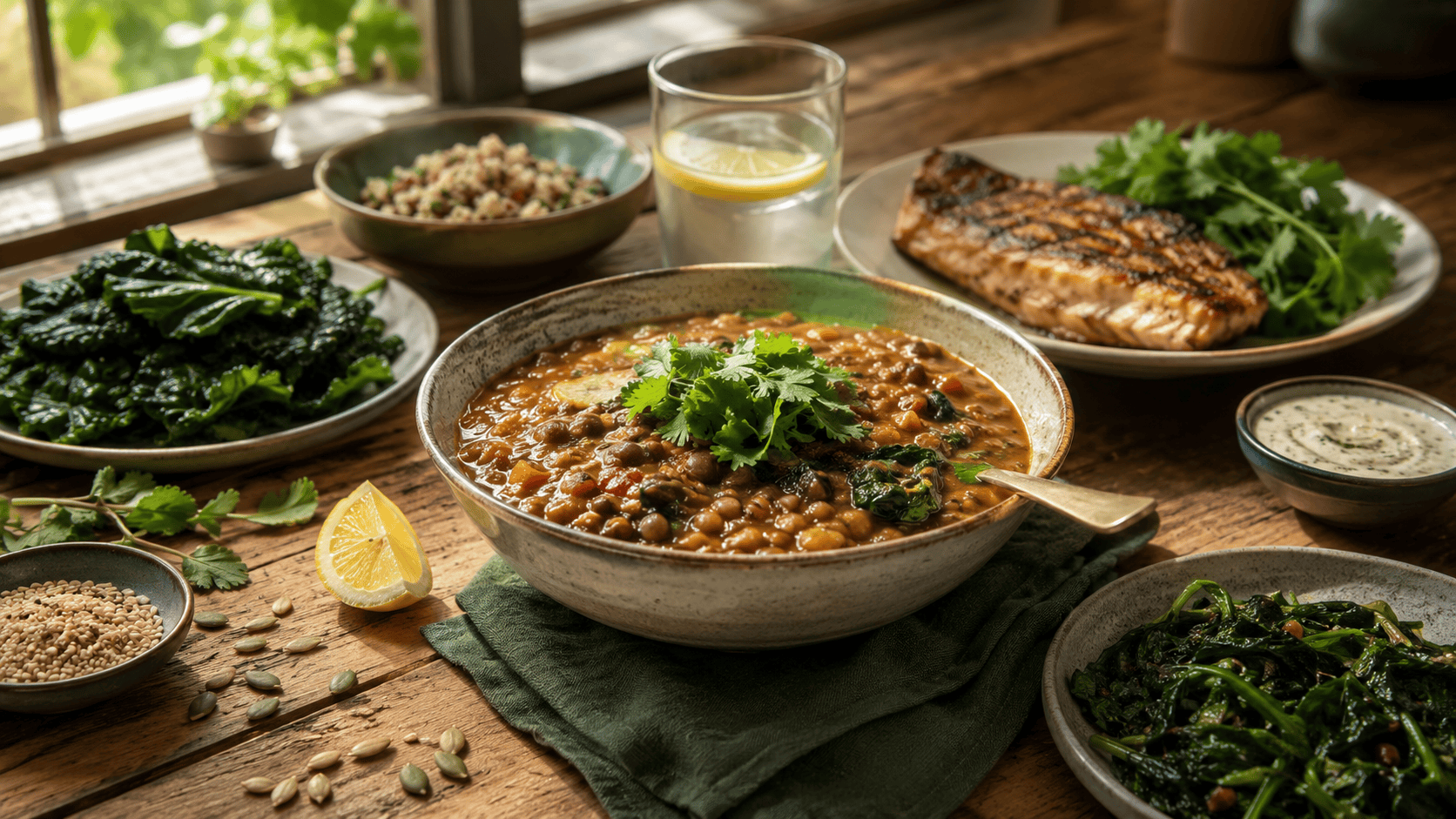
A practical guide to how iron works in food, the difference between heme and non-heme sources, what helps absorption, and what gets in the way.
It is possible to eat well and still end up with low iron. That surprises a lot of people. But the reason is not always about how much iron is in the food. It is about how much the body can actually take in. And that depends, more than most people realize, on where the iron comes from.
Not all iron-rich foods work the same way. Some are absorbed quickly and efficiently. Others need a little help. Understanding the difference is useful, because small, practical changes to how foods are combined can make a real difference to blood health.
This is not a diet plan. It is a simple guide to how iron works in food, built around examples from the way people eat across the world
What heme iron and non-heme iron are
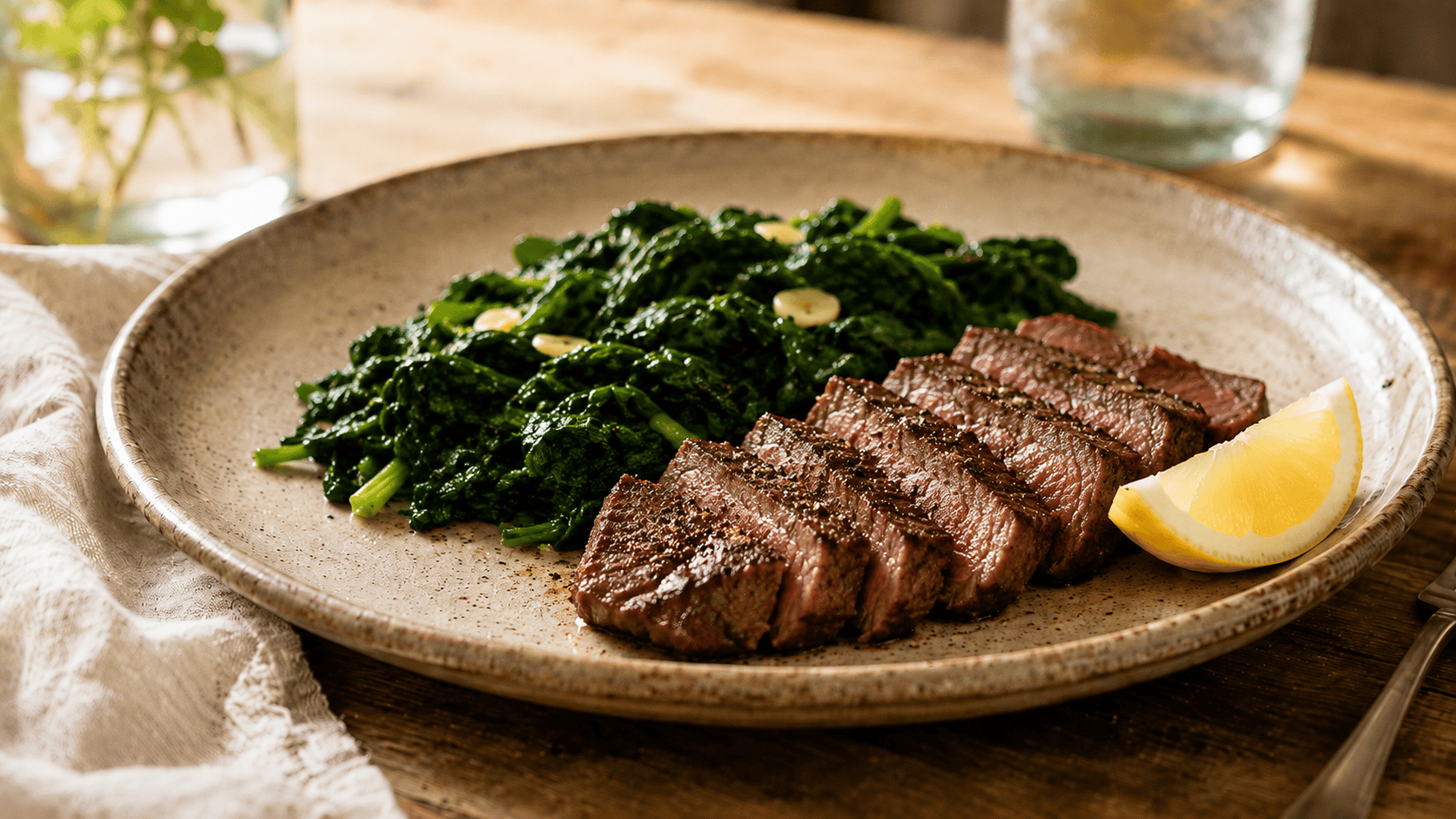
Iron in food comes in two forms, and the body handles them quite differently. The first is heme iron. It is found in animal foods, including red meat, poultry, fish, and shellfish. The body absorbs heme iron well. What else is on the plate at the same time does not change that absorption much.
The second form is non-heme iron. It is found in plant foods, including lentils, chickpeas, tofu, leafy greens, nuts, seeds, and fortified cereals. Eggs contain it too, even though they come from animals. The body absorbs non-heme iron less easily. And unlike heme iron, other foods eaten at the same meal can either help it get in or slow it down.
This does not make one type of food better than the other. But it does mean that getting the most from plant-based iron sources comes down to knowing which foods work well together, and which ones are better kept apart. That is something anyone can do, whatever their diet looks like.
Foods rich in heme iron
Heme iron comes from animal foods only. Lean red meat is one of the richest sources, with beef, lamb, and venison all good choices. Liver is especially high in heme iron, though it is not a common food everywhere.
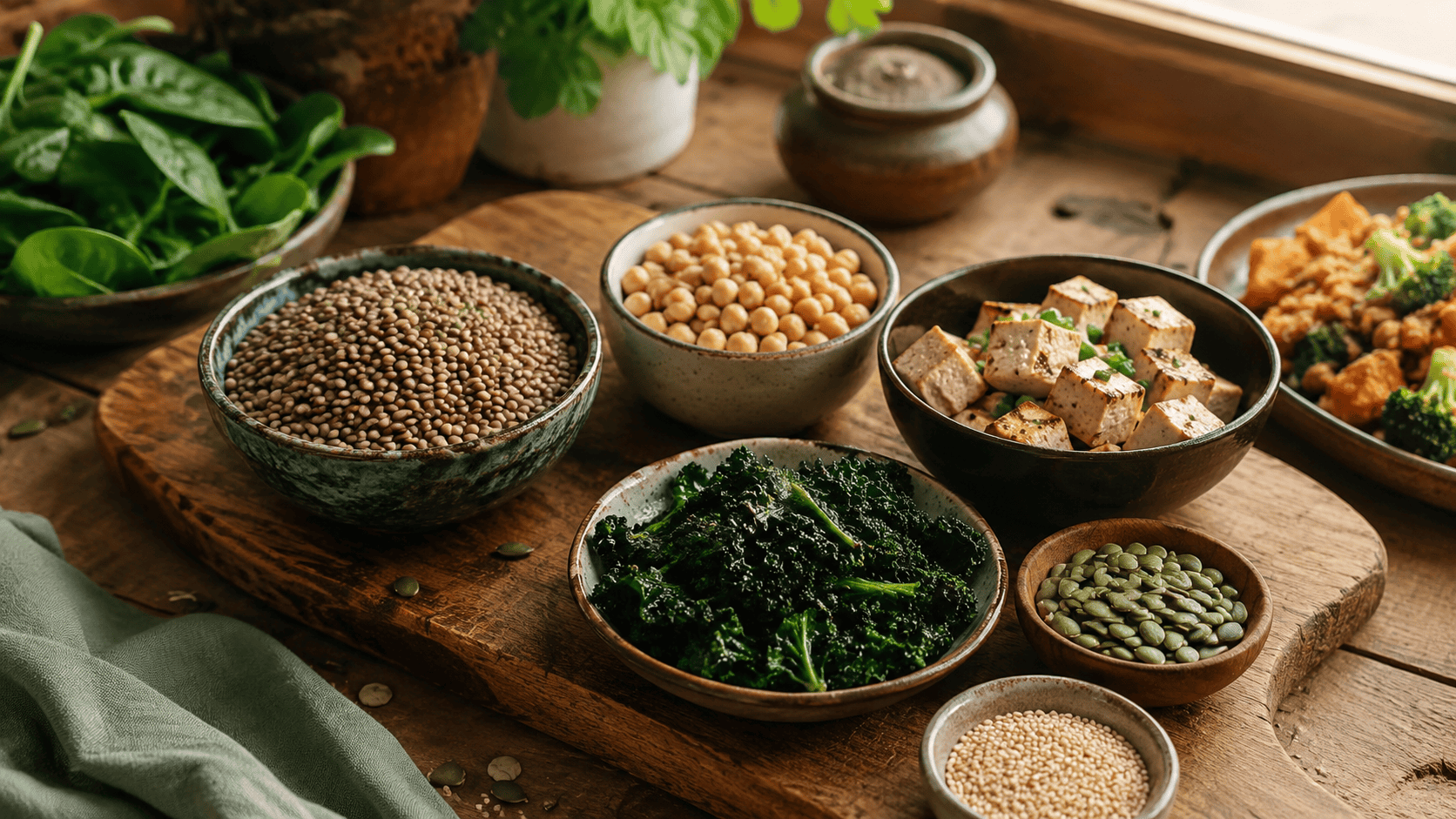
Seafood is another strong option. Oysters, clams, mussels, and sardines are all high in heme iron. So are salmon, tuna, and most other fish, though in smaller amounts. Poultry adds to iron intake too, with darker cuts like thighs and drumsticks providing more than breast meat.
For those who eat animal products, these foods are a solid starting point for iron intake. Even small portions help, because the body absorbs heme iron so efficiently. But they are not the only way people around the world meet their iron needs, and for many people, plant-based sources are the main option.
Foods rich in non-heme iron, including across global cuisines
Non-heme iron is what most people around the world rely on. It shows up in a wide range of plant foods across many different cooking traditions. Lentils are one of the most widely eaten sources globally, from dal in South Asia to hearty stews across East Africa and the Middle East. Chickpeas and kidney beans appear in dishes from the Caribbean to the Mediterranean to Central Asia.
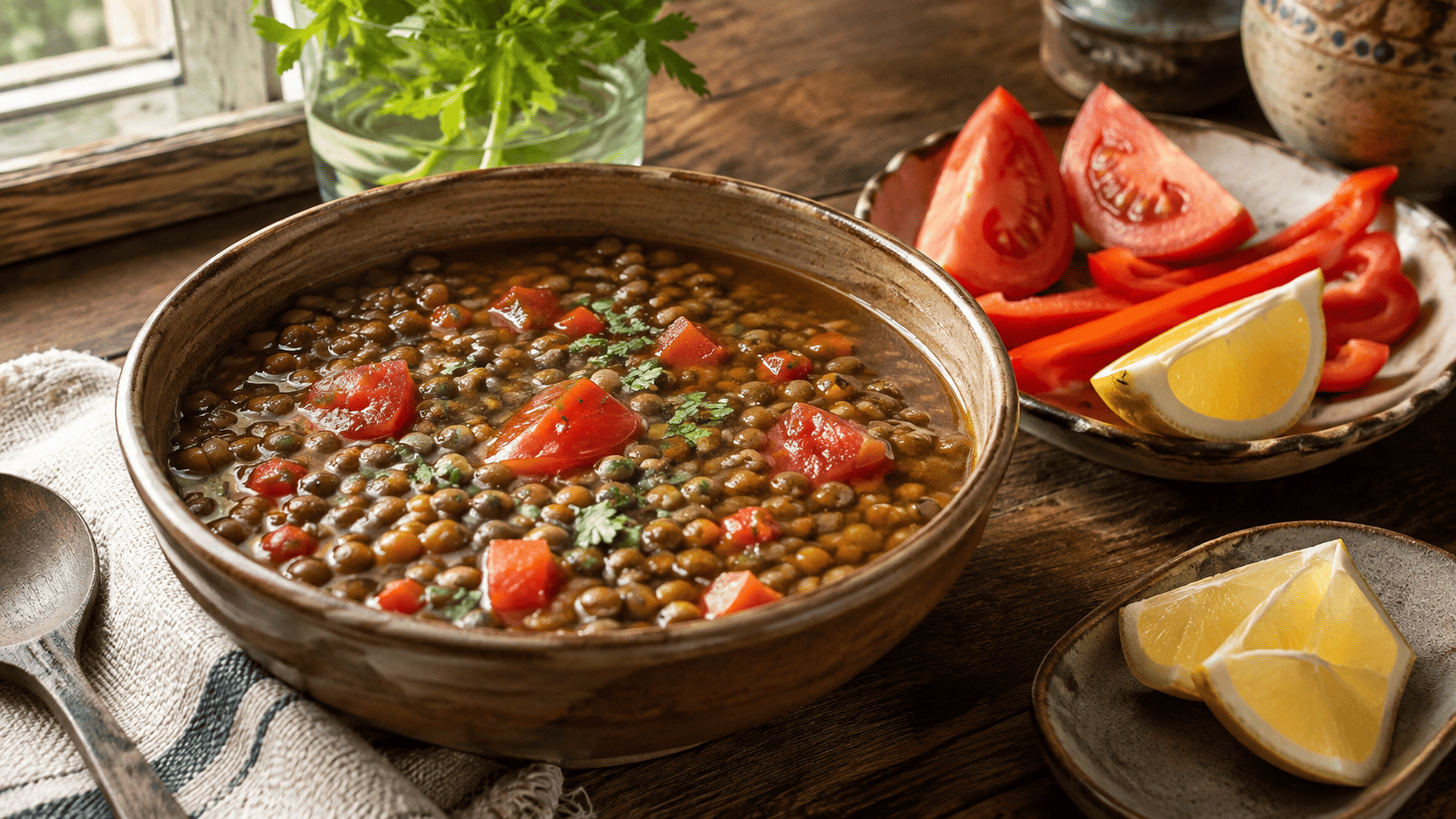
Tofu and tempeh are everyday sources across much of East and Southeast Asia. Dark leafy greens, including spinach, amaranth, and moringa, are staples across Africa, South Asia, and Latin America. Pumpkin seeds, sesame, sunflower seeds, quinoa, and wholegrains all contribute too.
In many parts of the world, iron is added to staple foods like bread and breakfast cereals during the milling process. So even a simple bowl of cereal or a slice of bread can contribute to daily iron intake. For communities where fresh produce is harder to access or afford, these everyday foods can be an important part of the picture.
Cost and availability shape what people can realistically eat, and those realities differ enormously around the world. The point is not to follow one particular way of eating. It is to know that getting enough iron from plant foods is possible across many different diets, as long as there is some understanding of how to help the body absorb it.
What helps iron absorb
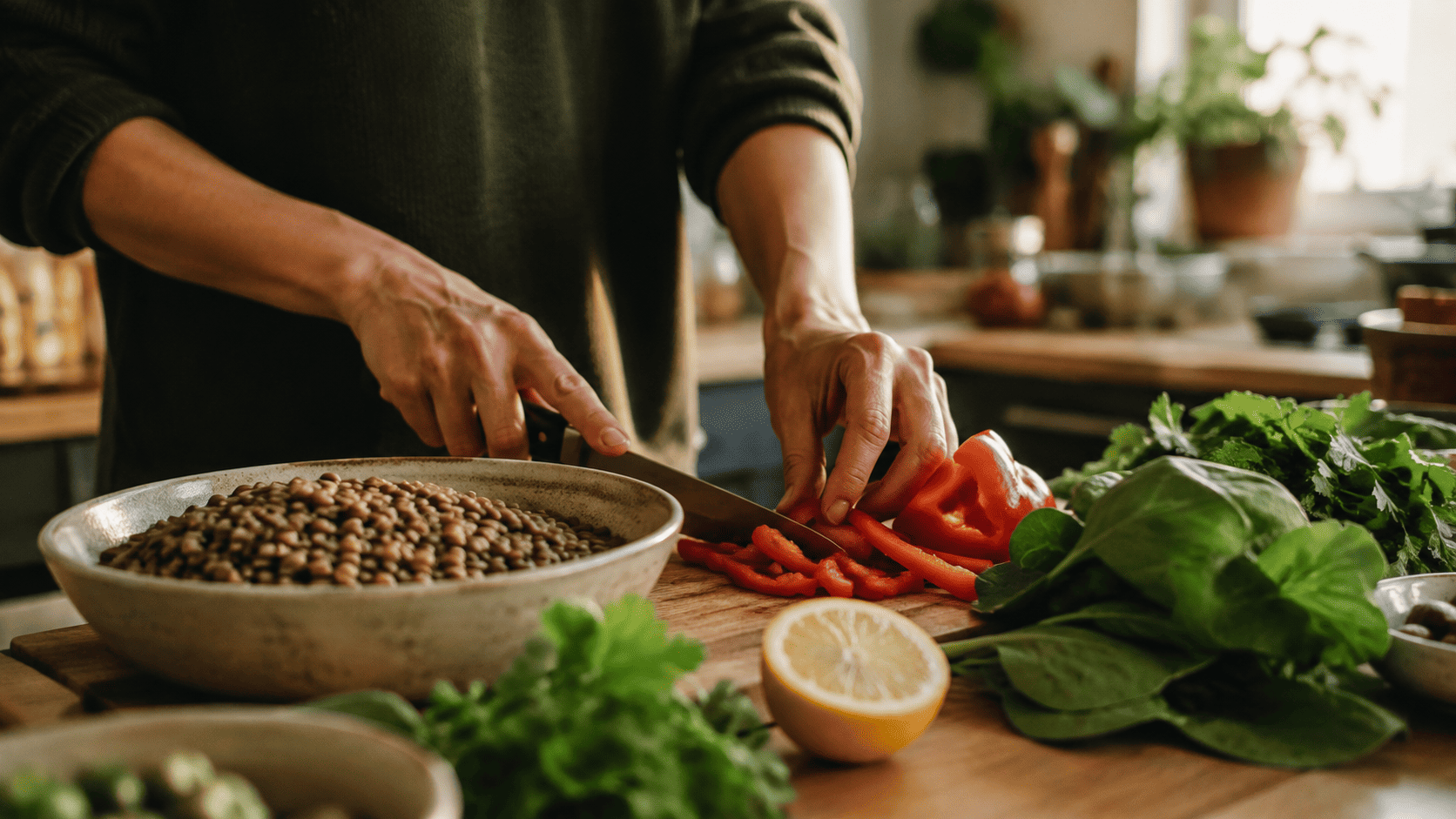
Vitamin C is the most well-proven way to improve how much non-heme iron the body takes in. When it is eaten at the same meal as a plant-based iron source, vitamin C converts iron into a form the body can absorb much more easily. This does not require anything unusual. Lentil soup with tomatoes, chickpeas with red pepper, spinach with a squeeze of lemon, or a glass of orange juice alongside a fortified cereal all work on exactly that principle.

Widely available sources of vitamin C include citrus fruits, tomatoes, strawberries, bell peppers, broccoli, and guava. Pairing any of these with an iron-rich plant food at the same meal is a simple, low-cost step that works across many different diets and food traditions.
Meat, poultry, and seafood also help the body absorb non-heme iron when eaten at the same meal. So a small portion of fish or chicken alongside a lentil or bean dish means the body takes in more iron than either food would provide alone. For people who eat both animal and plant foods, that combination works naturally in their favor.
What blocks iron absorption
Just as some foods help, others work against iron absorption. The aim here is not to avoid these foods. It is simply to be more thoughtful about when they are eaten.
Tea and coffee are the most common ones to be aware of. Both contain natural compounds called polyphenols, which can attach to iron in the digestive system and stop it from getting into the bloodstream. Drinking tea or coffee between meals, rather than with an iron-rich meal, is an easy change that reduces this effect significantly.
Wholegrains, legumes, and seeds contain natural substances called phytates, which can also reduce how much non-heme iron is absorbed when eaten at the same time. Traditional food preparation methods like soaking, sprouting, and fermenting these foods can lower their phytate levels. This is one reason those practices have survived across so many cooking traditions. They are not just habit. They often have a real effect on how the body uses what it eats.
Calcium in large amounts, particularly from supplements taken at the same time as iron-rich foods, may also reduce absorption. Spacing calcium supplements and iron-rich meals apart during the day is a simple fix. Dairy foods in normal meal-sized portions are much less likely to be a concern for most people.
A note on dietary patterns and individual differences
Iron needs vary between people, and not just because of what they eat. Life stage matters a great deal. Pregnancy increases the body’s iron requirements significantly. Adolescence, particularly when periods begin for girls, is another time when those requirements go up. For most adults, a varied diet that includes good iron sources and supports absorption can meet everyday needs without detailed tracking.
People who follow plant-based diets need more total iron from food than those who eat meat, because non-heme iron is absorbed less easily. But that does not mean plant-based diets fall short. It means they benefit from a little more attention to variety, to how foods are combined, and to how they are prepared.
Some health conditions affect absorption regardless of diet. Celiac disease, inflammatory bowel disease, and other digestive conditions can reduce the body’s ability to take in iron from food. For anyone living with one of these conditions, or for anyone with persistent symptoms like unexplained tiredness or breathlessness, a conversation with a healthcare provider is worth having. A simple blood test can give a much clearer picture than diet alone.
In Other Words
Plain-English definitions of terms used in this blog.
- Heme iron A form of iron found in animal foods including meat, poultry, and seafood. The body absorbs it well, and other foods eaten at the same time do not greatly affect how much gets through.
- Non-heme iron A form of iron found in plant foods, fortified cereals, and eggs. The body absorbs it less easily than heme iron, but eating it alongside vitamin C or animal proteins can improve how much is taken in.
- Bioavailability How much of a nutrient the body actually absorbs and uses from food. Iron absorption varies by food type and what is eaten alongside it.
- Phytates Natural substances found in wholegrains, legumes, and seeds that can reduce how much non-heme iron the body absorbs. Soaking or fermenting these foods before cooking can help reduce this effect.
- Polyphenols Natural compounds found in tea, coffee, and some plant foods that can reduce non-heme iron absorption when consumed alongside iron-rich foods.
Did you know?
- The body absorbs approximately 14 to 18 percent of iron from mixed diets that include meat and vitamin C, compared to just 5 to 12 percent from entirely plant-based diets, according to the NIH Office of Dietary Supplements.
- People who follow vegetarian or vegan diets need roughly 1.8 times more iron from food than those who eat meat regularly, because non-heme iron is absorbed less efficiently.
- About 25 percent of heme iron is absorbed from food, while 17 percent or less of non-heme iron is absorbed, according to a review published in StatPearls by the National Institutes of Health.
- Vitamin C eaten at the same meal as plant-based iron sources can meaningfully improve how much non-heme iron the body absorbs.
- Traditional food preparation methods such as soaking and fermenting legumes and grains can lower phytate levels, helping the body absorb more iron from plant foods.
Trusted Voices
What authoritative health sources say about iron-rich foods and absorption.
“The bioavailability of iron is approximately 14 to 18 percent from mixed diets including meat and vitamin C, and 5 to 12 percent from vegetarian diets. The iron requirement is 1.8 times higher for people who follow vegetarian diets.”
“Iron deficiency is the most common nutritional cause of anaemia worldwide. It results from inadequate dietary intake, poor absorption, or blood loss.”
“Iron deficiency anemia can be so mild at first that it goes unnoticed. Symptoms including extreme tiredness, weakness, and shortness of breath worsen as iron levels fall further.”
Mayo Clinic, Iron Deficiency Anemia: Symptoms and Causes (updated September 2025)
Questions to Ask
- I follow a plant-based diet. Do I need to think about my iron intake differently from someone who eats meat?
- Could a ferritin test give me a clearer picture of my iron stores alongside a standard blood count?
- Are there aspects of my health or digestion that might be reducing my iron absorption, regardless of what I eat?
- Could the foods I eat together be affecting how much iron my body actually absorbs?
- If my iron levels are lower than expected, could what I drink alongside meals be part of the reason?
What food can do for blood health
Getting more from iron-rich foods does not mean changing everything about the way a person eats. It comes down to a few practical ideas: plant-based iron sources alongside vitamin C, tea and coffee between meals rather than with them, and an awareness that what goes together on the plate matters.
Everyone’s situation is a little different, and food is just one part of the picture. When symptoms like persistent tiredness or breathlessness have been easy to explain away, a conversation with a healthcare provider is a good next step. A simple blood test gives a clearer picture than diet alone.
Know what to eat. Know what to pair.
We’re building a downloadable guide based on what clinicians say every household should know about iron-rich foods and absorption.
Disclaimer
This information is educational, not medical advice. Always talk to your doctor before making changes to your health care.